Following The Money: How Grant Dollars Move Through Nonprofits

This is a guest blog.

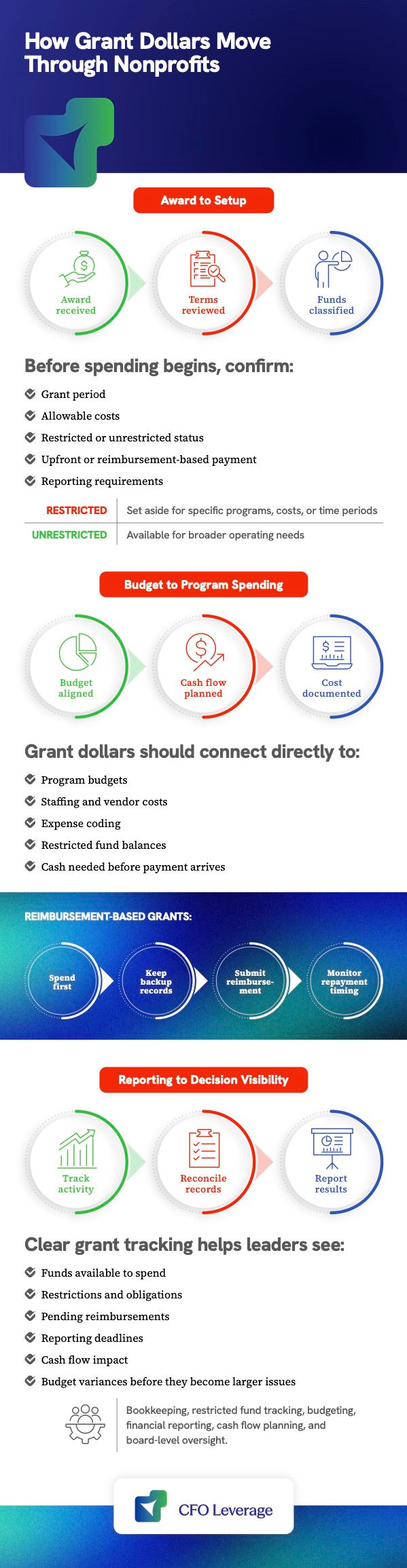
Grant funding can help nonprofits expand programs, serve more people, and strengthen community impact. Once a grant is awarded, the money must move through a clear financial process. Strong tracking helps nonprofit leaders meet funder requirements, protect public trust, and make better decisions about program spending.
Grant Award and Budget Setup
The process begins when a funder approves a grant and provides an award letter or agreement. This document explains the grant amount, spending period, approved activities, reporting deadlines, and any restrictions.
Before money is spent, the nonprofit should set up a grant budget. This budget usually separates expenses such as salaries, supplies, equipment, travel, training, and administrative costs. Clear categories help staff understand how funds may be used.
Receiving and Recording Funds
Some grants are paid upfront, while others are reimbursed after expenses are submitted. Nonprofits must record grant income correctly when funds are received or promised.
Restricted grants should be tracked separately from general operating funds. This prevents money meant for one program from being used for another purpose. Accurate accounting for nonprofits is essential because grant restrictions must be honored throughout the funding period.
Spending Funds Responsibly
Grant spending should follow the approved budget and funder rules. Program managers and finance staff need to communicate regularly so expenses are reviewed before they are charged to the grant.
Payroll costs, vendor invoices, receipts, and purchase approvals should be documented. If spending plans change, the nonprofit may need written approval from the funder before shifting money between categories.
Monitoring Progress and Cash Flow
Grant management involves both financial tracking and program tracking. Leaders should compare actual spending against the budget each month. They should also review whether program goals are on schedule.
Cash flow matters too. Reimbursement grants can strain smaller nonprofits because expenses must be paid before funds arrive. Planning ahead helps avoid delays in payroll, vendor payments, or service delivery.
Reporting to Funders
Most grants require financial and program reports. These reports show how funds were spent and what outcomes were achieved.
Strong reports rely on organized records. Nonprofits should keep invoices, timesheets, receipts, bank records, and progress notes in a central system. Clear reporting builds funder confidence and can support future grant opportunities.
Grant dollars move through nonprofits with purpose, documentation, and accountability. From award setup to final reporting, each step should connect funding to mission-driven work. Nonprofits that manage grants carefully can protect compliance, improve transparency, and make every dollar easier to trace.
Look over the infographic below to learn more.